While Brandon Browner is no sure thing to make Seattle’s roster, it didn’t cost the Seahawks much to bring him back — and won’t cost anything if they let him go.
As expected, he received the veteran minimum of $760,000 and will count just $600,000 on the veteran minimum-salary benefit. The Saints had guaranteed him $2.75 million in 2016, so they will be paying the balance.
Pete Carroll and John Schneider have never been afraid to bring back former players, so it’s not a big surprise that they have reclaimed a couple of veterans from their Super Bowl-winning team.
Clemons, 34, seems to have the better chance, offering some help in the pass rush and as an extra veteran voice for Frank Clark and other young linemen.
But Browner would seem to have an uphill battle to make the team.
New lineman Bradley Sowell posted an Instagram picture of some of Seattle’s linemen practicing with Russell Wilson and company at USC.
From left to right: J’Marcus Webb, Mark Glowinski, Kristjan Sokoli, Will Pericak, Sowell. Webb and Glowinski are the only ones penciled in as starters right now.
Paul Richardson catches a pass from Russell Wilson during a workout in California.
A year ago, the Seahawks were a mess at wide receiver. Paul Richardson was recovering from a torn ACL, Jermaine Kearse had played horribly in the two biggest games of the year, and Doug Baldwin had temporarily changed his name to Dookie.
The Seahawks knew they had to get better at receiver, so they made two blockbuster trades — acquiring Jimmy Graham and Tyler Lockett.
Those two were just what Russell Wilson needed. Even though the offense struggled early in the season behind a poor offensive line and coaches who did not know how to use Graham (send him vertical!), the unit eventually took off.
Yes, they lost Graham to a torn patellar tendon in Week 12, but the stellar Lockett helped Baldwin and Kearse put together their best seasons.
Graham will spend this offseason recuperating and thus miss out on further developing rapport with Wilson until possibly September, but Richardson is back — already full speed as he works out with Wilson, Lockett and others in California. Kearse is back, too, on a three-year deal. And Baldwin is back for the final year of his old contract, pending a major extension.
It’s official: The Seahawks have completed the deconstruction of the offensive line that tagged along for the Super Bowl XLVIII win and are in full rebuild mode.
With injured (again) Russell Okung headed to the new Super Bowl champs in Denver on a prove-it deal, the Seahawks have completely turned over their line since 2013.
While continuity is one of the hallmarks of any great line, the Seahawks have not had much of that due to injuries and inconsistent play, so they aren’t really missing anything by letting Okung and company go. None of them were worth keeping.
It’s easy to see why so many people are scratching their heads over the Seahawks’ underwhelming offensive line moves this week, especially when everyone seems to have a different opinion of where J’Marcus Webb will play.
But there is a method to Seattle’s madness — even if we might not agree with it.
First of all, remember that the Seahawks run a zone blocking scheme, which emphasizes mobility and teamwork over talent. Like it or not, that is the approach the Seahawks have taken the last four years — and apparently the approach they continue to take.
John Schneider said it himself at the Combine: “In terms of our philosophy, we are going to keep attacking it the same way we always have.’’
The Seahawks love size and versatility — and they got both in Webb and Bradley Sowell, the guys who ostensibly replace J.R. Sweezy and Alvin Bailey. Both are huge (Webb is 6-7, 335; Sowell 6-7, 315) and have played every position but center. The problem is neither is that talented.
Two down. Three to go. Including the most important.
The Seahawks made a couple of moves Monday, essentially replacing Brandon Mebane and Alvin Bailey with one-time Hawk Sealver Siliga and former Arizona backup Bradley Sowell.
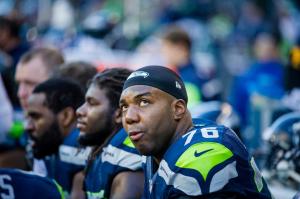
Now they have three spots left to fill, needing to replace Bruce Irvin and J.R. Sweezy and — most important — come up with a starting-caliber left tackle.
With the re-signing of Jon Ryan on Friday, the Seahawks are 4-3 with their eight key UFAs — Russell Okung being the last free agent standing.
If you thought the last few days were full of drama, get a load of this LT puzzle.
As Okung leaves the Giants to visit the Lions (and maybe the 49ers after that), the Seahawks reportedly are planning to meet with Pittsburgh tackle Kelvin Beachum on Monday and reportedly have some interest in Oakland tackles Donald Penn and J’Marcus Webb, along with Arizona’s Bradley Sowell.
Thanks to going minus-five in free agency last year, the Seahawks are going to get three compensatory draft picks this year — including a rare third-rounder.
You can bet John Schneider would be fine with getting another third next year — and he has two free agents who might be able to net him that.
The Seahawks have eight key unrestricted free agents — four defensive starters, three offensive starters and punter Jon Ryan — and are not going to be able to keep all of them. In fact, Seattle could end up losing six UFA starters.
But Schneider would be fine with that — because it would mean another nice haul of comp picks (up to the maximum four) in 2017.
A couple of months ago, we wrote that the Seahawks’ bosses — Pete Carroll and John Schneider — were going to have to make some changes no matter how the season ended.
Well, the season has ended (prematurely), and now it is time for those changes.
“There’s all kinds of stuff we’re going to be working on,” Carroll said Monday. “There’s tons of stuff. I’m not going to single anything out right now because there’s no way I can do that and be talking straight with you, because I don’t know. We don’t know at this point. We have a lot of thoughts, and we’re just going to start putting them together over the next few weeks and all.”
Although the Seahawks are slated to have more free agents this year than they have had in any year since Schneider and Carroll arrived in 2010, Schneider’s focus will be a little bit different this time.


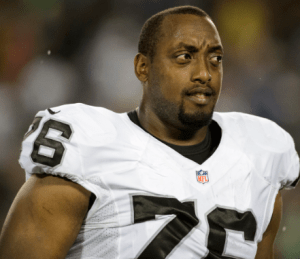 It’s easy to see why so many people are scratching their heads over the Seahawks’ underwhelming offensive line moves this week, especially when everyone seems to have a different opinion of where J’Marcus Webb will play.
 Two down. Three to go. Including the most important.
 And then there was one.
 Thanks to going minus-five in free agency last year, the Seahawks are going to get three compensatory draft picks this year — including a rare third-rounder.
 A couple of months ago, we wrote that the Seahawks’ bosses — Pete Carroll and John Schneider — were going to have to make some changes no matter how the season ended.
 CHAWK TALK: Everything being said about the Seahawks